Blog
Figurative Expressionism in My Art: A Personal Perspective
Beyond the Surface
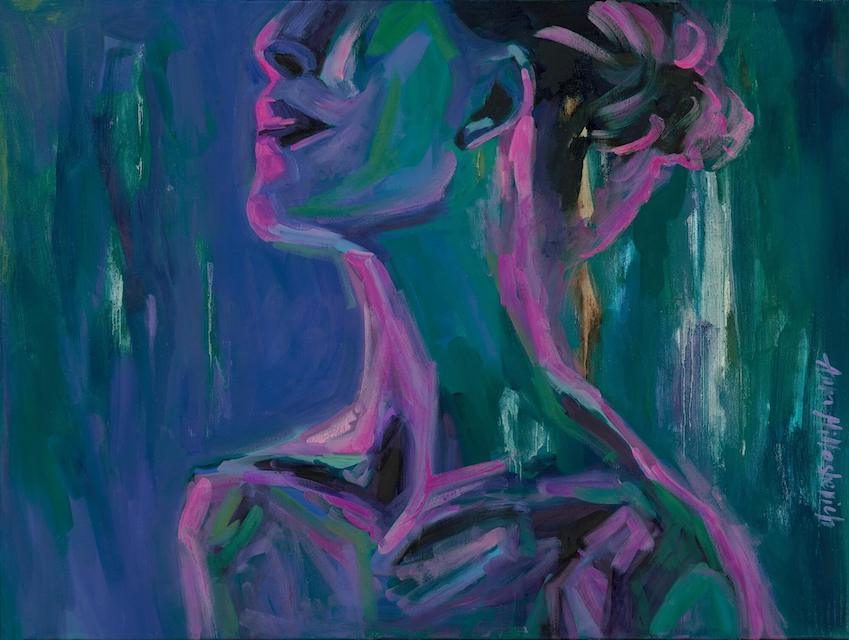
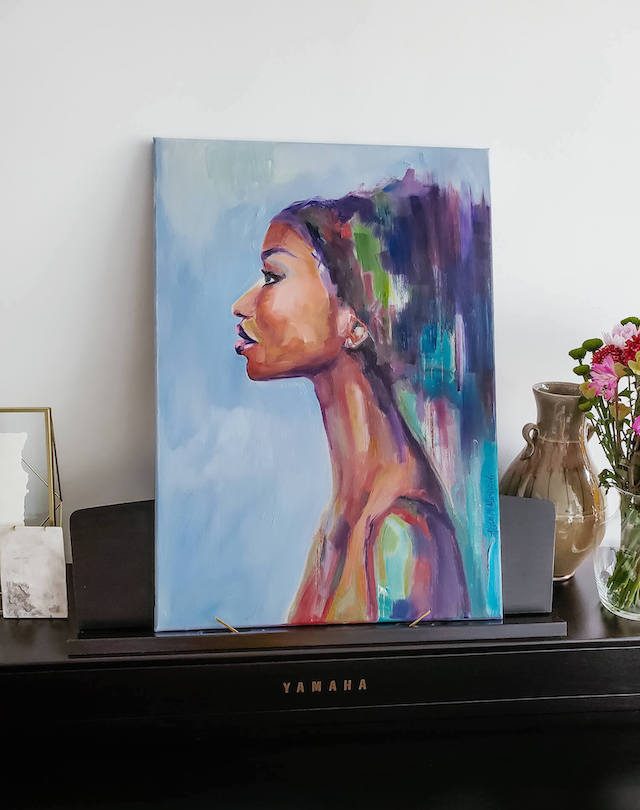
When I paint a woman, I don’t try to convey what she looks like. I try to reveal what lives beneath the surface. The figures in my paintings are not traditional portraits. They are not about fleeting emotions—those are simply moments that pass. Instead, I am interested in something more permanent: the essential features, the architecture of character, and the weight of a person’s choices. I don’t paint how a woman feels right now; I paint who she is at her core.
This approach wasn’t there from the beginning. It was only after years of practice—and many frustrated hours at the easel—that I realized my natural language is figurative expressionism. It is a way of preserving the human form while allowing an inner state to transform it.
I keep coming back to the human figure because it allows me to speak about the human condition without directly explaining it. A posture, a turned head, a stretched neck, or the weight of a shoulder—all of these carry a person’s story before words can even form. It is an endless, sometimes exhausting, field of exploration.
Let’s stay in touch.
If the tension between abstraction and reality resonates with you, consider joining my email list. It’s where I share my latest works-in-progress and stories from the easel before they go public.
New members receive a 10% welcome gift on their first art print or accessory order.
Step into the Studio
Between Abstraction and Reality
I find freedom in the space between realistic depiction and complete abstraction. I can simplify or intensify parts of the image while preserving the figure’s truth. This allows me to move beyond likeness into something more intuitive.
The characters in my paintings are usually abstract, but they are rooted in something concrete—a particular character, a set of actions, or a silent force that stays with me. This creates a tension I appreciate: the work remains personal to my impulse, yet open to your own interpretation.
The Choice of Color: A Sudden Impulse
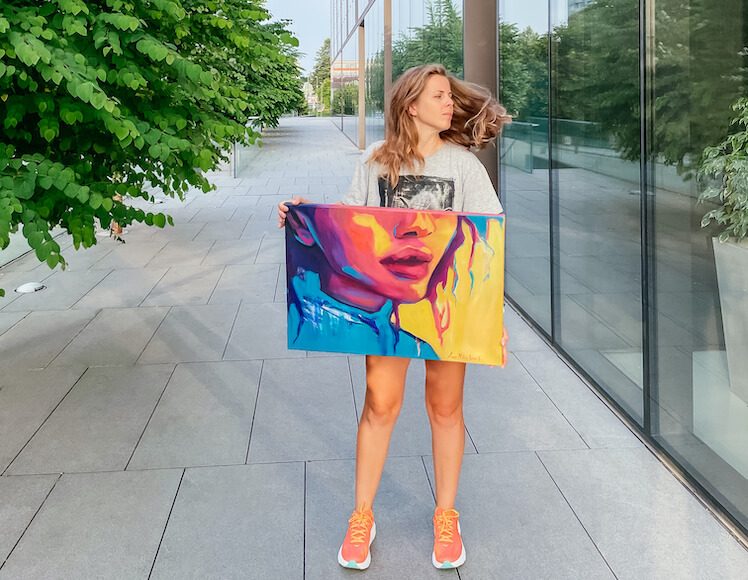
Sometimes the best choices happen when I run out of white paint or struggle with a muddy palette. My collections vary—some are pastel and quiet, others are saturated and loud—but color always “sounds.” I might deliberate over a facial feature or a line, but I choose color instantly. Most of my paintings are actually born from color; the initial idea is often just a specific hue that demands to be expressed.
What Happens on the Canvas
My process isn’t about polishing an image to perfection; it’s about the physical act of creation. Sometimes this means bold brushstrokes and harsh contrasts that I later have to wrestle with. Other times, it’s quieter—touching the surface with my fingers, using a scrap of cloth, or softening an area to let the character breathe. The brushstroke can be hard, hesitant, or smooth—and each choice alters the work’s temperature.
Why It Matters
I don’t think of painting as a way to provide answers. I think of it as a way to retain complexity—to leave room for ambiguity and internal dialogue. Figurative expressionism allows the figure to remain human, but not fixed. It ensures that the painting remains alive—not closed off by explanation, but open to being felt and understood over time.